
 English

Importance of Ayurvedic Postpartum Care After Childbirth!
Ayurveda, the ancient Indian system of medicine, offers a holistic approach to prenatal and postnatal care. It emphasizes balancing the body, mind, and spirit to promote overall health and well-being. Here are some ways Ayurveda can help mothers after delivery:
Physical Recovery
Herbal Remedies: Ayurveda uses various herbs to promote healing and recovery. For instance, herbs like Ashwagandha, Shatavari, and Turmeric are known for their rejuvenating and anti-inflammatory properties.
Abhyanga (Oil Massage): Regular oil massages with Dhanvantri Body Massage Oil help improve circulation, reduce muscle tension, and promote relaxation. This practice also supports the healing of the uterus and other reproductive organs.
Dietary Recommendations: Postpartum Diet: Ayurveda emphasizes a balanced diet tailored to the mother’s constitution (Prakriti). Post-delivery, a diet rich in warm, easily digestible foods, like cooked vegetables, grains especially Amaranth, and soups (Murungai Soup) are recommended. It aids in digestion and provides nourishment. Consume warm, nourishing, and easily digestible foods like kitchari (a rice and lentil dish), ghee, and herbal teas. Avoid cold, raw, and processed foods.
Mental and Emotional Well-being
Meditation and Yoga: Practicing meditation and gentle yoga helps reduce stress, improve mental clarity, and promote emotional balance. Specific postnatal yoga poses can also aid physical recovery and strengthen the body.
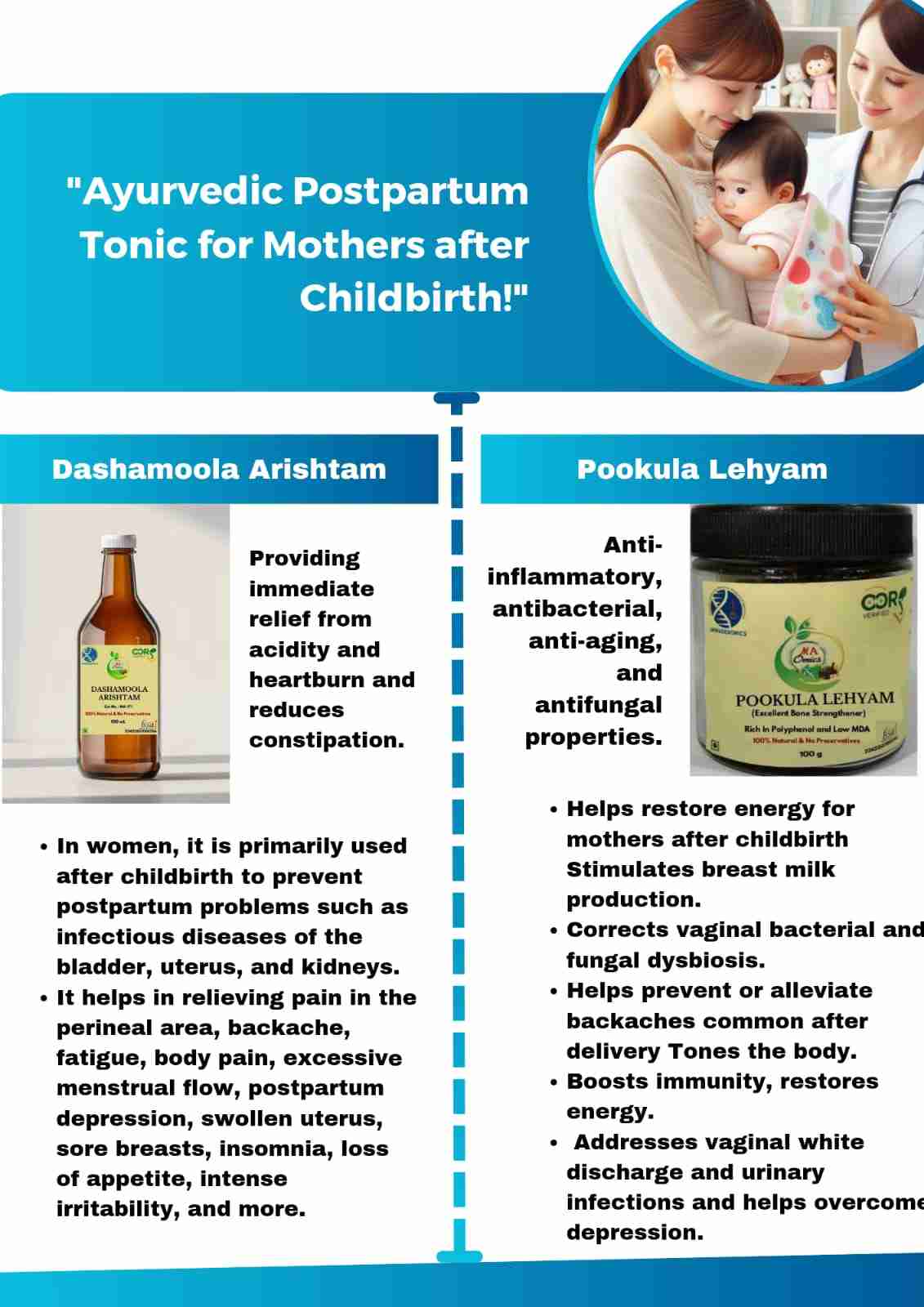
Rasayanas (Rejuvenative Tonics): Ayurvedic tonics, such as Pookula Lehyam, Dashamoola Arishtam, and Chyawanprash are recommended. It is rich in polyphenols and antioxidants. They are used to boost immunity, improve gut health, enhance energy levels, and support mental well-being.
 Breastfeeding Support
Galactagogues: Ayurveda recommends certain herbs like Shatavari, Fenugreek, and Pookula Lehyam. It enhances milk production and improves the quality of breast milk.
Hydration: Adequate hydration with herbal teas like Corriander Ginger Tea, and soups made with fenugreek seeds are great to drink. Warm water is encouraged to support lactation and overall health.
Education and Counselling
Postnatal Care Practices: Ayurvedic practitioners guide daily routines (Dinacharya). This supports physical and mental health, including proper sleep, hygiene, and self-care practices.
Emotional Support: Ayurveda emphasizes the importance of a supportive environment for new mothers. It includes the involvement of family and community to provide emotional and practical support.
Prevention of Complications
Detoxification: Ayurvedic practices like Panchakarma (a detoxification and rejuvenation therapy), castor oil cleansing, etc., can help cleanse the body of toxins accumulated during pregnancy and childbirth.
Tailored Treatments: Individualized treatment plans are provided by AMMAGENOMICS based on the mother’s specific health needs and constitution to help prevent and manage postpartum complications.
Long-term Health
Lifestyle Advice: Ayurveda promotes a balanced lifestyle with regular routines, proper diet, exercise, and adequate rest to maintain long-term health and well-being.
Holistic Approach: By addressing physical, mental, and emotional aspects, Ayurveda ensures a comprehensive approach to the mother’s health. It promotes long-term harmony and balance. By integrating Ayurvedic principles into postnatal care, mothers can experience enhanced recovery. It improves mental and emotional well-being and long-term health benefits thus proving the Importance of Ayurvedic Postpartum Care after Childbirth.
AMMAGENOMICS offers PCR-based Microbiome tests for infertility and healthy pregnancy and childbirth. We also provide free treatment suggestions and dietary lifestyle for prenatal and postpartum care. MA Omics, part of AMMAGENOMICS focuses on functional foods which are high in Polyphenol Content and low in MDA. OORJV-certified and tested Pookula Lehyam, Dashamoola Arishtam, Chyawanprash, postpartum healthy teas, and Dhanvantri Body Massage Oil are all available in MA Omics.


