English
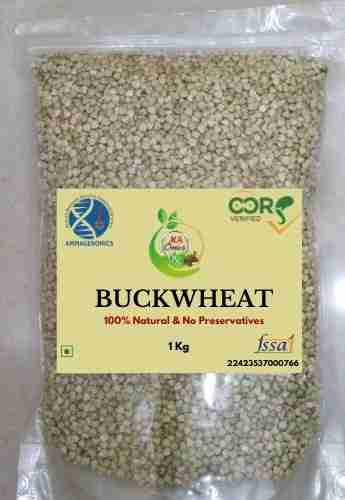
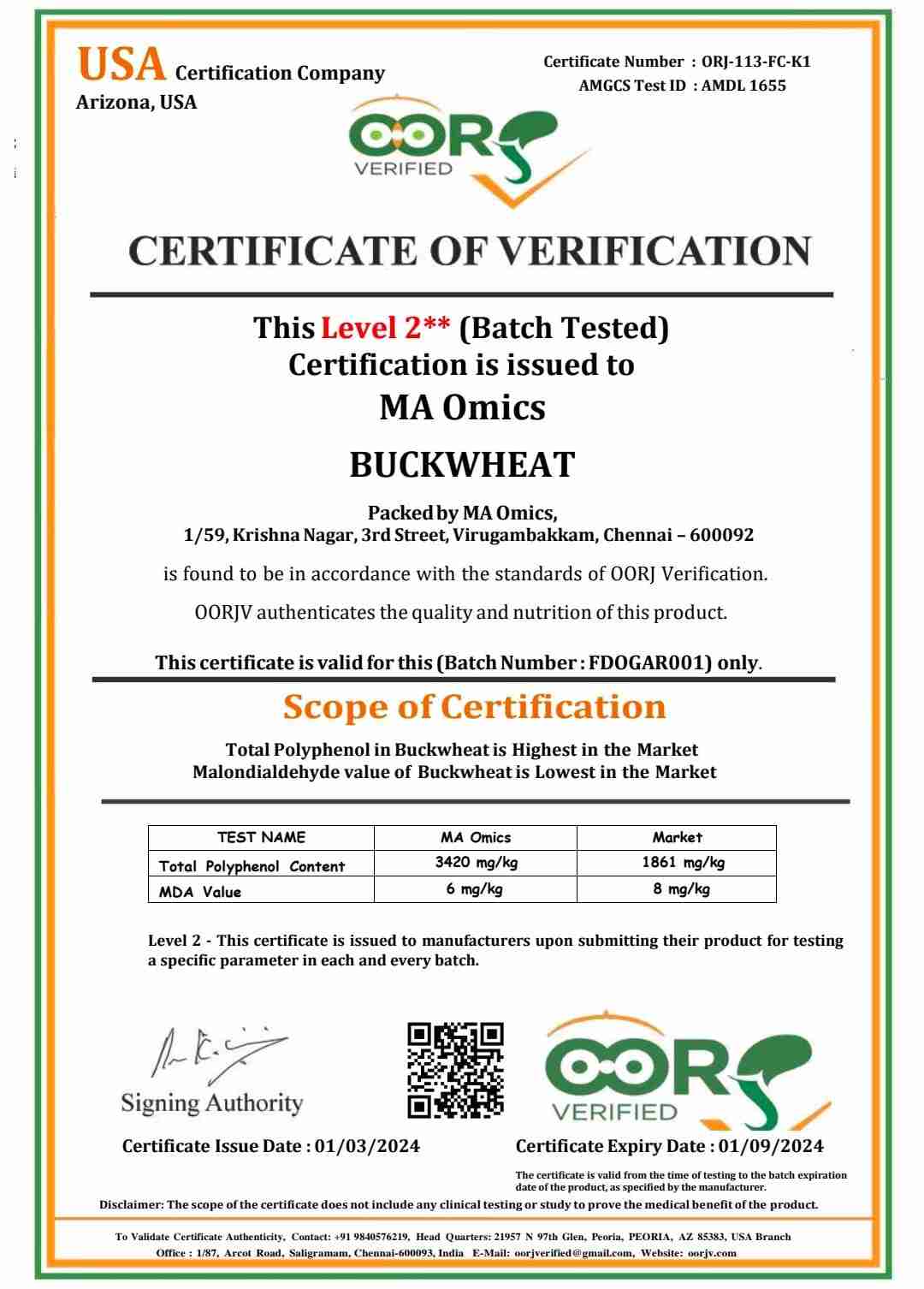
- Certification: Buckwheat is tested by AMMAGENOMICS Food Testing Laboratory and certified by OORJV (Level 1 *) for High Polyphenol Content (medicinal value) and Low Malondialdehyde (MDA). The Polyphenol content of this product is highest compared with other similar products in the market. Please scan the QR Code for more details.
- Ingredients: Polyphenol and Rutin-rich Buckwheat.
- Benefits: Buckwheat (Fagopyrum tataricum) is not some wheat as the name indicates but belongs to the rhubarb family. It is pseudocereal and its seeds are high in starch content. It is rich in phytochemicals (polyphenols) like rutin, and tannins, and free from inorganic arsenic. Rutin is important for curing varicose veins, hydrocele, internal bleeding, and hemorrhoids. It helps prevent strokes due to its antiplatelet, antioxidant, anti-inflammatory, antibacterial, antiprotozoal, and hypolipidemic effects. It is also good for treating cancer, autism, aging skin, respiratory infections due to over-exercising, etc. It also strengthens the blood capillaries and prevents gastric mucosal ulceration. It helps reduce high blood pressure, and arteriosclerosis risk with anticonvulsant and neuroprotective effects. Buckwheat flour in Hindi is “Kuttu ka atta”. It has been used in festivals like Shivarathri, Navarathri, and Krishna Janmashtami during rice fasting. Buckwheat contains no gluten. So it is used for wheat or gluten-related diseases like celiac disease, gluten sensitivity, and dermatitis herpetiformis.
Nutrition: Cooked buckwheat is rich in protein (13%), dietary fiber (10%), B vitamins especially niacin, and minerals like magnesium, manganese, and phosphorus. It can be had as breakfast, either sweet or spicy. Soak well for six to eight hours and then pressure cook it.
Caution: Buckwheat contains fagopyrins so people with food allergies should try eating a smaller portion and if it is fine, it can be consumed regularly. - Disclaimer: Several scientific research publications and traditional medical texts show that the above ingredients are antiplatelet, antioxidant, anti-inflammatory, antibacterial, and antiprotozoal. Therefore, Buckwheat can be a good breakfast option. Any government agency does not test this product for the efficacy of the product for health claims. The picture of the product you order and receive may have slight differences. However, the content we describe will be the same.